15 Summer Programs You Have to Apply to in Fall or Early Winter (2027)
Top Early-Deadline Summer Programs for High School Students
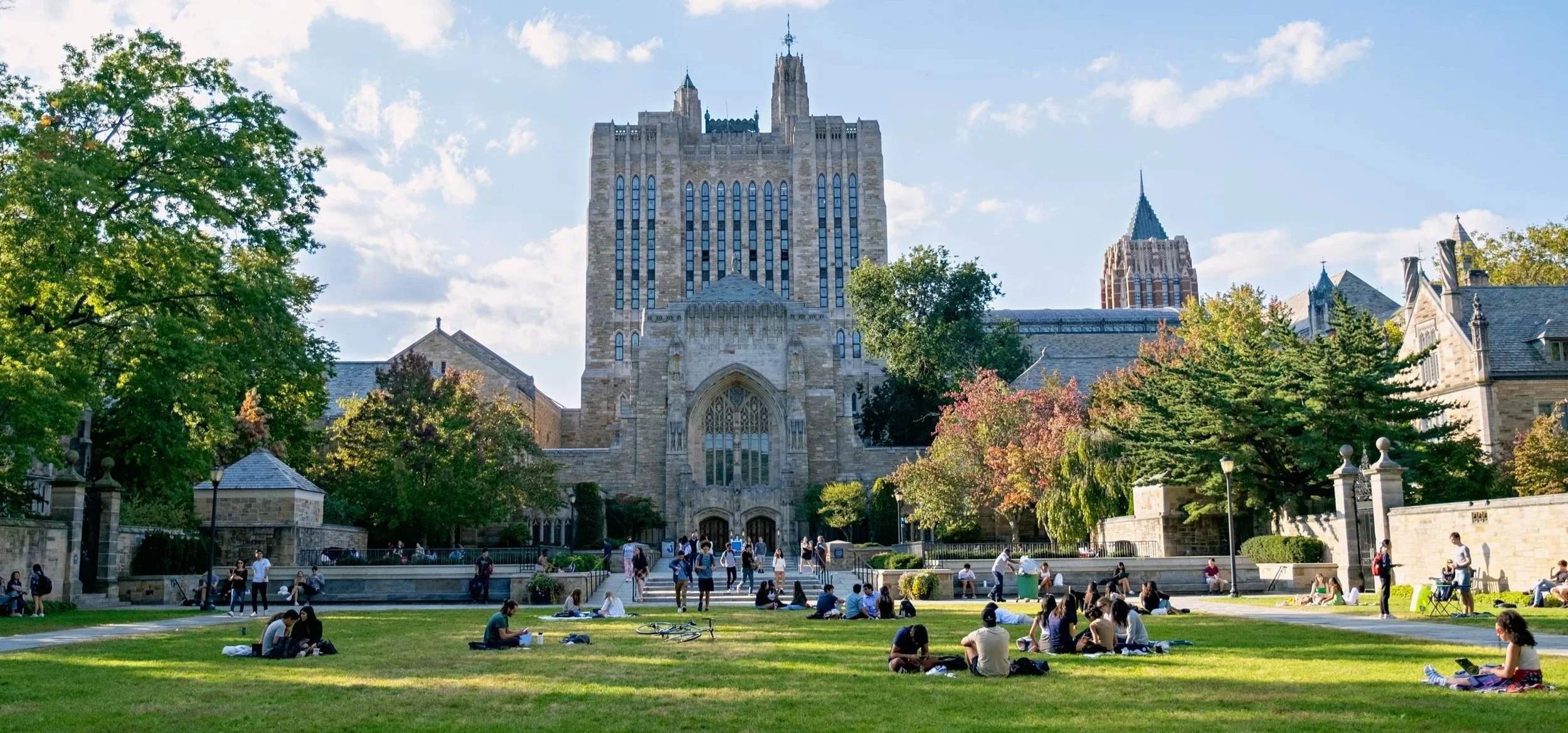
Students enjoy Yale’s Cross Campus in summer. Photo by Anna Zheng, courtesy of Yale University
Last updated: September 2026
Although January used to be a great time to start planning for summer, a number of top programs for high school students now have fall and early-winter deadlines. Opportunities include free research internships with the Navy, fully funded language immersion abroad, unique experiences at Yale and MIT...but all require you to act between October and February.
Below are fifteen programs with early deadlines, ordered by when you first need to act. Many are completely free or even pay you a stipend; those that charge tuition often offer need-based aid. Deadlines shown are from each program's most recent cycle. Programs keep similar calendars year to year, but most post exact dates in early fall, so be sure to confirm on the linked deadline page.
- 1. Yale Young Global Scholars
- 2. Navy SEAP
- 3. NSLI-Y
- 4. TASS
- 5. Research Science Institute
- 6. LEDA Scholars
- 7. Harvard Secondary School Program
- 8. Harvard Pre-College Program
- 9. AFRL Scholars
- 10. Interlochen Arts Camp
- 11. Iowa Young Writers' Studio
- 12. Notre Dame Leadership Seminars
- 13. Wharton Global Youth
- 14. Summer Science Program
- 15. MIT MITES Summer
- FAQs · Quick-reference table
1. Yale Young Global Scholars (YYGS)
Two-week interdisciplinary academic sessions at Yale with one of the most international student bodies of any summer program. Unusually (for summer programs) they have an EA round which closes in mid-October, months before most families start thinking about summer.
2. U.S. Navy Science & Engineering Apprenticeship Program (SEAP)
Eight weeks doing research in a Department of Navy laboratory and getting paid for it. SEAP is one of the earliest deadlines on the calendar; about 300 students are placed nationwide each year.
3. NSLI-Y (National Security Language Initiative for Youth)
The U.S. State Department pays all costs (travel, tuition, host family) while you spend 6-7 weeks abroad learning a language like Arabic, Mandarin, or Korean. If you love foreign languages, few summer experiences say more about your seriousness than this one.
4. Telluride Association Summer Seminar (TASS)
Six weeks of college-level critical thinking about how power and privilege shape society. Completely free, including room and board. TASS admits sophomores as well as juniors, making it one of the few elite social sciences options for younger students.
5. Research Science Institute (RSI)
A prestigious STEM summer program: six weeks of mentored original research at MIT, free of charge. If your student is a serious researcher, this is an incredible opportunity.
6. LEDA Scholars
A free five-week summer institute on the Princeton & Yale campuses with college-admissions support afterwards, for high-achieving students from under-resourced backgrounds. The December Part I deadline is the first stage of a multi-step process.
- Apply by: Dec 9
- Plan: Multi-stage (Part I → Part II → interview)
- Selectivity: Very selective (~100 scholars/year)
- Open to: Current juniors
- Cost: Free
- Links: Website · Admissions
7. Harvard Secondary School Program
Credit-bearing Harvard Summer School courses in four- or seven-week formats. Admission is less competitive than the name suggests; the early application round in December–January is mainly about securing preferred courses and housing. Although rising juniors can be eligible, I generally recommend this program for rising seniors, and Harvard's Pre-College program (below) for rising juniors.
- Apply by: Early application Dec 1–Jan 7 (most recent cycle); regular rounds follow
- Plan: Early + regular rounds
- Selectivity: Low–moderate
- Open to: Ages 15–18
- Cost: Tuition (varies by format); aid available
- Links: Website · Admissions
8. Harvard Pre-College Program
Harvard's other summer track: two weeks, residential, and non-academic credit, so a more exploratory environment than the Secondary School Program. Nearly 30 courses per session across three summer sessions, with the same early-application calendar as Harvard's SSP.
- Apply by: Early application & priority financial aid by Jan 7 (opens Dec 1; 2026 cycle); regular deadline mid-Feb, late round to April 1
- Plan: Early + regular + late rounds
- Selectivity: Low–moderate
- Open to: Rising juniors & seniors, age 16 by program start (and under 19)
- Cost: $6,100 + $75 application fee (2026), incl. room & board; limited partial scholarships
- Links: Website · Deadlines
9. AFRL Scholars (High School)
A stipend-paid internship working alongside Air Force Research Laboratory scientists and engineers.
10. Interlochen Arts Camp
The country's flagship residential arts camp, where you can focus on music, theatre, film, dance, visual arts, or creative writing. Auditioned programs have a mid-January priority date, and the full-tuition Orchestral and Fennell Scholars awards require a completed application by then.
- Apply by: Priority Jan 15 for audition/portfolio programs; non-audition programs roll from December
- Plan: Priority + rolling
- Selectivity: Varies by discipline
- Open to: Grades 9–12 (younger divisions also exist)
- Cost: Tuition; scholarships available
- Links: Website · How to Apply
11. Iowa Young Writers' Studio (Residential)
Two weeks of intensive creative writing study at the University of Iowa, home of the legendary Writers' Workshop. The application is only open for about two weeks and requires a writing sample, so it's important to start preparing for this one in advance. (Note that Iowa also offers 6-week online programs twice each year, with different application deadlines. The winter 2027 deadline is Oct 31, 2026.)
- Apply by: Application window ~Jan 19–Feb 1 (most recent cycle)
- Plan: Fixed short window
- Selectivity: Highly competitive (judged on writing sample)
- Open to: Current 10th–12th graders
- Cost: $2,500 incl. room & board (2026); need-based aid incl. full-tuition grants
- Links: Website · How to Apply
12. Notre Dame Leadership Seminars
Ten days debating global issues with Notre Dame faculty, with possible college credit. The university covers tuition, housing, and meals for everyone admitted. One of the best free options for students with strong leadership records.
13. Wharton Global Youth Program
Business, finance, and entrepreneurship intensives at a top business school on Penn's campus. Applications are reviewed on a rolling basis after the late-January priority deadline, and popular sessions fill, so priority is the deadline that matters.
- Apply by: Priority late January (Jan 28 in the most recent cycle); rolling after until full
- Plan: Priority + rolling
- Selectivity: Moderately selective
- Open to: Current 9th–11th graders
- Cost: Tuition
- Links: Website · Application Info
14. Summer Science Program (SSP)
Five weeks of team research at campuses across the country. You could spend your summer tracking asteroids, designing enzyme inhibitors, or sequencing genomes. Note that you need a school nomination by late January before you can complete your application.
- Apply by: International deadline late Jan; domestic deadline mid-Feb
- Plan: Staggered deadlines; nomination required first
- Selectivity: Very selective (est. ~10%)
- Open to: Mostly current juniors (some sophomores)
- Cost: Tuition scaled to family finances; need-based aid
- Links: Website · Application
15. MIT MITES Summer (formerly MIT MITES)
Six free weeks at MIT: courses, undergraduate mentorship, and a final symposium project. The February 1 deadline makes this the last call on this list, but recommendation letters and essays take weeks, so start in December. MITES focuses on students from backgrounds underrepresented in science and engineering; see their website for details.

-
RSI, TASS, MITES, LEDA, and Notre Dame Leadership Seminars are completely free (most cover room and board). Navy SEAP and AFRL Scholars go further and pay students a stipend, and NSLI-Y is fully funded by the State Department. Among the tuition-based programs, YYGS offers need-based aid up to 100% of tuition, and SSP and Iowa Young Writers' Studio both offer need-based aid including full grants.
-
Most open between August and October for the following summer. A good rule of thumb: spend September & October researching and lining up recommenders, so you're ready when applications open. Exact dates for next summer typically appear on program websites in early fall.
-
Yes, but not always in the way you might think.
Highly selective programs like RSI, TASS, and the Iowa Young Writers' Studio are indeed resume-builders, strengthening an application in and of themselves.
Beyond programs like those, admissions officers are well-aware that many brand-name programs (including most pre-college programs at prestigious universities) are only moderately selective; having them on the resume doesn’t intrinsically add anything.
Yet these programs can also form an important part of a student’s portfolio. Not only do they show initiative and intellectual depth, they are chances for kids to try new things, explore new subjects, and pursue avenues that may not be open to them in high school. Often, these experiences are highlighted in the student’s essays.
Either way, I always counsel families to prioritize passion over prestige. As I told The Wall Street Journal in a February 2026 piece on summer-activity pressure, extreme efforts to "stage-manage" a student's narrative can backfire — admissions officers are professionals at sniffing that out. What matters most is what a student does with the experience and how it connects to their broader story.
-
Plenty of excellent programs have February-through-April deadlines — Clark Scholars at Texas Tech, Kenyon Review Young Writers, School of The New York Times Summer Academy, and many university pre-college sessions with rolling admission. Missing the fall wave can narrow your options, but it doesn't eliminate them.
Frequently Asked Questions
All 15 Programs at a Glance
| # | Program | First Action Date | Plan | Cost | Apply |
|---|---|---|---|---|---|
| 1 | Yale Young Global Scholars | Oct 15, 2026 (EA); Jan 6, 2027 (RD) — confirmed | EA + RD | Tuition, aid to 100% | Deadlines |
| 2 | U.S. Navy SEAP | Early Nov (Nov 1 recently); 2027 TBA | Single deadline | Paid stipend | Apply |
| 3 | NSLI-Y | Early-mid Nov | Single deadline | Fully funded | Deadlines |
| 4 | TASS | Early Dec | Single deadline | Free | Timeline |
| 5 | Research Science Institute | Early-mid Dec | Single deadline | Free | Apply |
| 6 | LEDA Scholars | Dec 9, 2026 (Part I) — confirmed | Multi-stage | Free | Admissions |
| 7 | Harvard Secondary School Program | Early app by early Jan | Early + regular + late | Tuition; aid | Admissions |
| 8 | Harvard Pre-College Program | Early app by Jan 7 | Early + regular + late | $6,100; partial aid | Deadlines |
| 9 | AFRL Scholars | Jan 10, 2027 — confirmed | Single deadline | Paid stipend | Dates |
| 10 | Interlochen Arts Camp | Priority Jan 15 | Priority + rolling | Tuition; scholarships | How to Apply |
| 11 | Iowa Young Writers' Studio | Window ~Jan 19–Feb 1 | Fixed window | $2,500; aid | How to Apply |
| 12 | Notre Dame Leadership Seminars | Jan 20, 2027 — confirmed | Single deadline | Free | Deadlines |
| 13 | Wharton Global Youth | Priority late Jan | Priority + final round | Tuition | Application Info |
| 14 | Summer Science Program | Intl. late Jan; domestic mid-Feb | Staggered | Sliding-scale tuition | Application |
| 15 | MIT MITES Summer | Feb 1 — confirmed | Single deadline | Free | Apply |
To parents: Planning a student's summer means giving them opportunities to pursue their passions and have experiences that can anchor their college essays. If you'd like help thinking that through, learn about working with me, check out my book Write Yourself In, or subscribe to the Admitted newsletter for deadline reminders through the fall.