How to Write a Great Common App Personal Essay (and 5 Mistakes to Avoid)
Aim for authenticity in your college essays
Last updated: August 17, 2026
By Eric Tipler, college admissions counselor and author of Write Yourself In
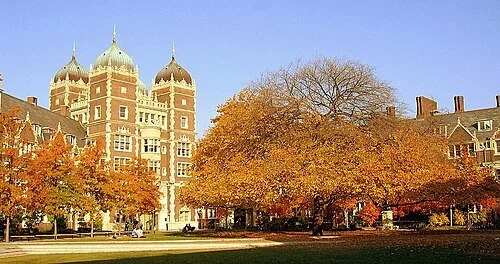
The Upper Quad on the University of Pennsylvania campus (photo by Bryan Y.W. Shin)
The lowdown: Admissions officers at highly selective colleges and universities prize authenticity in college essays. The key to authenticity is writing about something that’s personally meaningful, so the best Common App personal essay topic is one that’s genuinely meaningful to you. Avoid common pitfalls of thinking that the essay has to be “big,” needs a flashy hook, a sob story, or should make you look perfect. Instead, tell the reader a story about something you did or that happened to you, simply and clearly, then reflect on what you took from the experience.
“My kid needs an essay that makes them stand out!”
– Parents everywhere
“How do I write something unique?”
– Students everywhere
Each summer, as parents and teens start thinking about topics for the Common App personal essay, I hear a symphony of variations on “How do I write an essay that stands out?” and “How do I write something that’s unique?”
These concerns are understandable. With acceptance rates at historic lows and top schools fielding tens of thousands of applications, who can blame them? Of course the idea of standing out is paramount.
Yet I’ve come to believe that these are the wrong questions to ask. Not because “standing out” isn’t useful, but because the ways in which most college applicants try to stand out lead them to write essays that are at best forgettable, and at worse, actually harm their candidacy.
So in this article I’ll explore what makes a great personal essay, how and why trying to “stand out” can actually undermine you, tips on avoiding the most common essay pitfalls, and how to, instead, write your best essay!
What do admissions officers look for in a personal essay?
First and foremost, admissions officers read college essays to get a sense of who you are as a person, beyond your grades, scores, and extracurriculars. Colleges admit humans, not robots, and while top schools certainly prize achievement and excellence, they are not looking for perfection. In your essays, they’re looking for your humanity.
Important questions in their mind are likely: Who are you? What do you care about, and why? What personal qualities will you bring to a college community?
The Director of Admissions at Penn summed up the task students face when writing a personal essay quite well when she said:
“If you were to meet a stranger, and if you had to get them to ‘get you,’ or at least understand you a bit as a human, in a very short amount of time, what would be the few things you would say to them so that they understood you?”
– Jordan Pascucci, Vice Dean and Director of Admissions, University of Pennsylvania, interviewed in 2025
Because most admissions officers will never meet you, and they may only spend 10-15 minutes (or less) reviewing your application, essays are your best chance help them understand your personality, your values, your character.
Another way of thinking about the college essay’s purpose is that the transcript, test scores, and activities list are about the “what,” while the essays are about the “why.” In a session I attended at the 2024 NACAC conference, Barnard’s Director of Admissions explained what she does and doesn’t look for when reading essays:
“I don’t care what you do; I care how and why you’re doing it.”
– Ruby Bhattacharya, Director of Admissions, Barnard College, speaking at the 2024 NACAC national conference
For students, the implication is to showcase “what” you’ve done in your Common App activities list and honors section, and focus on the story behind those accomplishments — the “how” and the “why” — in your essays.
What makes a Common App personal essay stand out?
Authenticity is what makes a personal essay stand out. I’ve come to believe this because admissions officers from dozens of Top 50 schools have told me so! In fact, if you ask an admissions officers at a highly selective college or university what makes a great essay, their answer will usually include some form of the word “authenticity.”
For example:
“...if you're applying in a selective space, most of the people have the academic credentials to be competitive. And the place where they often stand out is in the authenticity they bring to their storytelling.”
— Lee Coffin, Vice President and Dean of Admissions and Financial Aid, Dartmouth College, on the Admissions Beat podcast, 2023
“The authenticity of the writing is what makes it effective.”
— Ellen Kim, then Dean of Undergraduate Admissions, Johns Hopkins University, in The Washington Post, 2016
“Your most successful essay is going to be in your authentic voice.”
— Hannah Mendlowitz, Director, First-Year Process, Undergraduate Admissions, Yale University, on Yale's admissions podcast, 2023
What does “authenticity” mean in this context?
authenticity (noun): “the quality of being real or true”
— Cambridge English Dictionary
Authenticity, or what Gen Z might call “realness,” is simply being true, genuine, or lifelike. It’s the feeling you get from reading an essay or a poem or experiencing any kind of art (including social media) where you know you’re experiencing something true of the person who created it. Sometimes authenticity gives you chills or moves you to tears; more often, it simply creates a sense of connection to the human on the other side of whatever you’re reading.
AI-generated text is the perfect example of what authenticity isn’t. ChatGPT can quickly produce writing that’s technically correct, but it feels flat. Most of us can detect it from a mile away, because it’s nearly impossible for AI chatbots — at least in their current form — to write something that feels authentic to a human reader.
Why authenticity matters in holistic review
Authenticity is important because the vast majority of selective American colleges use an admissions process called “holistic review.” In holistic review, no single factor (e.g. a high GPA, an SAT score) determines whether you get in. Instead, as a College Board report explains:
“…holistic review involves consideration of multiple, intersecting factors—academic, nonacademic, and contextual—that enter the mix and uniquely combine to define each individual applicant.”
— Arthur L. Coleman and Jamie Lewis Keith, Understanding Holistic Review in Higher Education Admissions: Guiding Principles and Model Illustrations (New York: College Board, 2018), p. 4.
In other words, decisions are made by an admissions committee that examines a variety of factors: grades and test scores, but also activities, recommendations, demonstrated interest (at certain schools), and of course…essays!
Colleges like holistic review because—they believe—it enables them to look beyond the numbers and understand not only the unique individual behind each application, but the context in which that person grew up. What opportunities were available to you in your community and school? Did you make the most of them? Answers to those questions, according to proponents of holistic review, give admissions officers a better sense of not only whether you’d be successful at their school, but how you might contribute to their campus community. (To see how one prominent college employs the concept, check out “holistic admissions” in Dartmouth’s admissions glossary.)
As you might guess, holistic review is both quantitative and qualitative. It involves both objective and subjective evaluations, and the latter is where authenticity comes in. If your essays come across as authentic, it’s much easier for an admissions officer to take what you say in them—as well as everything else in your application—at face value. Authenticity makes your entire application believable, and thus compelling. Additionally, the emotional connection that an authentic essay creates can make a reader more likely to be “on your side” when it comes time to vote on whether or not to admit you.
Holistic Review and AI
All of the above has been true for decades, but as we enter the age of AI, authenticity is more important than ever. Not only are more students getting outside help on their essays (from parents, teachers, counselors, and admissions consultants), AI has it made it possible to generate writing that is polished, grammatically correct…and highly inauthentic.
As Princeton’s Dean of Admissions put it:
“First and foremost, I guarantee that any essay one writes with the help of AI is not going to be nearly as good or authentic as one that an applicant composes on their own. And, remember, we’re trying to build a community of learners who will contribute to the academic and social fabric here, so we count on authenticity in the application.”
— Karen Richardson, Dean of Admission & Financial Aid, Princeton University, in Princeton’s admissions blog (2025)
AI is good at some things—research, “chancing,” and building colleges lists, to name a few—but it’s not yet good at writing authentic, human-sounding prose. Avoid it when composing your essays.
The “Uniqueness Paradox:” 5 personal essay mistakes to avoid
In philosophy there’s an idea called the “hedonistic paradox,” which is that the single-minded pursuit of happiness is self-defeating: if your only focus is making yourself happy, you end up making yourself miserable. (If you don’t believe that, think of how you’d feel if you ate your favorite ice cream all day, every day, for a week. Or what two hours scrolling social media does to your brain!)
What I’ve seen is that a similar “uniqueness paradox” crops up when teens sit down to write college essays: students who focus on writing an essay that “stands out” are the ones most likely write something that is inauthentic. And because authenticity is what makes essays stand out, they end up writing a forgettable essay, exactly the opposite of what they are trying to create!
How does that happen? Here are the top five mistakes I see students making, often before they put a single word on the page.
1.“It has to be big.” What makes a Common App essay stand out isn't impressiveness
The first mistake I see students often make, especially when they’re applying to prestigious schools, is assuming that their essay has to be impressive. This is understandable, because you want to “stand out,” and the best way to do so is to impressive them with something “big,” right?
Wrong. Trying to impress an admissions committee usually leads to pompous, grandiose-sounding essays that end up turning off the readers, and can actually undermine impressive accomplishments in a resume.
Jordan Pascucci, Penn’s Director of Admissions, summed up this trap rather nicely when she said:
“Students spend a lot of time thinking about ‘who they are on the awards stage,’ moments but they don't give the thought to ‘who they are in the hallway’ moments. And it's the hallway moments that actually make people stand out.”
– Jordan Pascucci, Vice Dean and Director of Admissions, University of Pennsylvania, interviewed in 2025
These “hallway moments” are usually smaller moments, from your ordinary life, that give the reader of sense of who you are as a person and why you do the things you do. These topics that tend to make the best essays, not the moments of glory on top of a mountain. Sam Prouty at Middlebury explained it well when he said:
“I like the [essays] that are small, that are about something small and uniquely you. It doesn’t have to be big, it doesn't have to be a resume, brag sheet, it doesn't have to be ‘I cured cancer.’”
— Sam Prouty, Director of Admissions, Middlebury College, interviewed in 2022
“Small” often works because it’s more personal. Another way of thinking about this: the place to be “impressive” is in your transcript, test scores, and activities list. Let those accomplishments speak for themselves. Your essays should show the committee who you are, not what you did.
2. “I need a great hook.” Do college essays need a hook?
No—the hook is not a priority in a college essay. Don’t get me wrong; hooks are great! But they are nowhere near the most important part of a personal essay. Unlike say, the average person scrolling through the news, an admissions officer’s job is to read your entire essay from beginning to end, regardless of whether there’s a flashy hook.
So often I see students get stuck on trying to think of the “perfect hook,” instead putting in the grunt work of writing a great essay, which takes many drafts of revision. (Spinning on your hook is also a trap because nine times out of ten, you won’t even know what the right hook is until after you’ve written the rest of the essay!)
I do see where students are coming from here; ever since middle school (if not earlier), it’s been drilled into them that an opening hook is an essential ingredient in a good essay. But the most important parts of a personal essay are the journey you take the reader on, and where you ultimately land, i.e. the conclusion. Hooks can help, but they are not necessary for a great essay, and they are certainly not sufficient.
3. “I need a sob story.” Do college essays have to be about trauma?
No, you don’t need a “sob story” or trauma in your college essay. However, the “sob story” question is something I hear a lot from parents in more privileged environments. They think that in order for their kid to be taken seriously, they need some sort of dramatic, traumatic story of struggle and hardship.
Happily, this is not true. A Vanderbilt admissions officer summed up the reality of the situation when she wrote:
“Not every student who is admitted to a selective institution has a ‘hook’ – a tear-inducing story, a bizarre talent, a near death experience, a world-famous uncle, etc. In fact, most admitted students are simply hard workers who have demonstrated leadership and academic excellence and would make strong contributions to their campus community.”
— Carolyn Pippen, then Admissions Counselor, Vanderbilt University, in Vanderbilt’s official Undergraduate Admissions blog (2014)
No student “needs” a sob story. Instead, what they need is a real story from their life, told in their authentic voice. Manufactured sob stories often backfire; when you read thousands of essays per year (as most admissions officers do), it becomes quite easy to separate genuine struggle from artificial angst.
And what if a college applicant actually did experience something uniquely challenging or difficult? That could be a good topic…as long as the essay shows how they learned and grew from the experience. Essays that only function as sob stories (i.e. “trauma dumping”) without giving the a reader a sense of how an applicant might contribute to a college community can directly undermine an otherwise-strong application.
4. “I have to fit everything in.”
If you’ve done a lot of different things in high school, the impulse to include EVERYTHING in your personal essay is understandable. You put so much time into so many activities, and you want to be sure the admissions officers don’t miss something.
Resist this impulse. Essays where a student tries to “fit it all in” usually result in what we call “kitchen sink essays,” or a “resume in a prose:” essays that read more like an annotated list of accomplishments. These are almost never effective in the committee room.
Instead, the best personal essays usually focus on one story from the writer’s life. 650 words isn’t much, and if you want your story to land, you’ll need every syllable. Additionally, at many schools you’ll be writing supplemental essays where you’ll want to explore topics that aren’t covered in the main essay.
This “kitchen sink” trap, by the way, is all is why I virtually never recommend the collage technique (a.k.a. montage essay or patchwork essay) for personal essays. A collage essay might consist of 5-6 paragraphs, each about a different sticker on your laptop or a different object in your bedroom. While this genre of essay can be easier to write, it’s unlikely to have the thematic depth that will tie your application together and make your it stand out at a highly selective school.
5. “I have to look perfect!” Why vulnerability is essential in a personal essay
It’s perfectly natural to want to portray yourself as flawless in your college essays. After all, the entire college application process is all about putting your best foot forward. Why would you want to put forward anything less than your best self in your essay?
The truth, however, is that a little bit of vulnerability is the secret ingredient in every great personal essay. To be clear: I don’t mean that you should write a cringeworthy mea culpa about every flaw, self-doubt, and perceived shortcoming. That’s unlikely to convince an admissions committee to accept you.
But it is crucial that you open up about some of your doubts, struggles, and challenges. You need to show the reader that you’re not perfect, that you know you’re not perfect, and that you have the maturity to acknowledge your weaknesses as well as your strengths.
Here’s what one admissions dean had to say on the topic:
"The reality is, perfection doesn't exist, and we don't expect to see it in a college application. In fact, admission officers tend to be skeptical of students who present themselves as individuals without flaws."
— Angel B. Pérez, then Vice President and Dean of Admission and Financial Aid, Pitzer College, in Education Week, January 31, 2012. Pérez is now CEO of NACAC.
The importance of vulnerability is probably, more than anything else, why putting together a strong college application is an art, not a science. It’s not easy to figure out exactly how and when and where to be vulnerable, while simultaneously putting your best foot forward. Yet with time, revision, and honest outside feedback, it’s quite possible to get there.
How to write a Common App personal essay that stands out: 5 steps
From reviewing the pitfalls above, you now have a good sense of not only what doesn’t work, but of why a personal story, well-told in your authentic voice, will make your essay stand out.
So…how do you write one? The most precise description I’ve heard for how to write a great Common App personal essay comes from a conversation I had with Jeff Brenzel, former Dean of Admissions at Yale. Brenzel told me that when high school students ask him for advice on college essays, he recommends they:
“Describe something you did or that happened to you, without overly dramatizing it. Reflect on what you took away from that experience. Then show it to people who know you well and ask them one question: ‘Does this sound like me?’”
— Jeffrey Brenzel, former Dean of Undergraduate Admissions and Financial Aid, Yale University (2024)
I think Dean Brenzel pretty much nailed it: tell a story that’s meaningful to you, reflect on what you learned, and get feedback from people who know you well. With his framework in mind, here are five concrete strategies that have helped hundreds of students write compelling, successful college essays.
1. Start early
In over two decades of teaching, I have never once seen a student write a first draft that was ready to submit. For most students, a good, authentic Common App personal essay usally takes five or six drafts.
That’s why it’s important to start early. Give yourself time to write, revise, and then put the essay away for a while and come back to it. July and August right before senior year are good months to start this process.
2. Tell a story you genuinely care about
Another paradox of personal essays is that the “best” topic is whatever topic inspires you to write your strongest essay. And that topic is always something that’s personally meaningful to the student. An idea might seem like “the perfect topic” in theory, but if it doesn’t inspire authentic prose, it’s worthless. Similarly, trying to game the system by “figuring out” what the admissions committee at Harvard or Princeton or wherever wants nearly always backfires, because what they’re looking for is the real you, not “what you think they want.”
When you write about something you truly care about, that passion will bring the essay to life for your reader. If you’re unsure about your topic, try freewriting a few paragraphs on several different topics and see which works best (freewriting is an important step in my one-on-one work with students; there’s also a section on it in Write Yourself In (pp. 77-78)).
3. Keep it simple. A good college essay structure is: beginning, middle, end
One of the few hard and fast rules in storytelling is that humans take in stories better when there is a clear beginning, middle, and end.
Organizing your essay with this in mind, from the first draft onward, will help you stay focused and avoid meandering writing that wastes words and distracts the reader.
4. Conclude by reflecting on what you took from the experience
Here I’m directly quoting Dean Brenzel’s advice. Your readers want a story, but they also need to understand what you learned from that story. Using your conclusion to show how you’ve grown from an experience not only makes the story land, it demonstrates your maturity and personal growth—two qualities admissions officers look for throughout the application, and especially in the Common App personal essay.
5. Revise, revise, revise
As mentioned in strategy #1, good personal essays take time. In fact, any kind of writing with depth takes time. True meaning rarely appears in the first draft of anything, whether it’s a play or a personal essay. Rather, it emerges gradually over time, through repeated revision and excavation.
And…at some point, revision has to end. When you find that your revisions are more about shuffling things around than adding depth, that’s usually a sign that you either need to put the essay aside for a while, or that it’s done. (For more help here, see out my revision checklist for guidance on determining when your college essay is done.)
Ultimately, it’s about more than just your college essay
Writing college essays is hard. Sometimes, it’s very hard. But it can also be rewarding. My favorite moments as a coach and counselor are when students, deep in the weeds of an essay, are able to look back and not only gain new insights on how they’ve grown, but develop a new sense of pride and confidence.
So I’ll close with a third and final “essay paradox:” the best Common App personal essays are usually those where the writer learned something new about themselves while writing the essay.
If you think about it, this makes sense. Applying to college is the start of a major life transition, and it’s an ideal time to ask yourself the questions, “What have I got?” and “What am I going to do with it?” Not coincidentally, these two questions are at the core of what psychologist Erik Erikson famously called the “adolescent identity crisis” (for more on this, see Gross, Introducing Erik Erikson: An Invitation to his Thinking (1987), p. 39). Successfully answering them is not only an important step towards adulthood, it gives you the material for a fantastic, personal, authentic college essay.
I hope you write an essay that takes you on that journey of self-discovery and helps you gain admission to a school where you will flourish. Here’s wishing you the best of luck on the road!
A note to parents: Writing college essays is challenging, and even the best-prepared students often struggle. If you’re wondering if your teenager could use support on their essays or the admissions process, reach out to learn more about how I work with students one-on-one.
Additional Reading
Writing the Lived Experience essay: A step-by-step guide to writing this common supplemental essay question, which also requires authentic storytelling
Writing strong supplements: Guides to writing supplemental essays that contribute to a strong overall application
Top ten personal qualities admissions officers seek: a guide to important character attributes that highly selective admissions officers at highly selective schools look for
Picking a great topic: A one-page checklist to help you evaluate your topic for your Common App personal essay.
Sources
Bhattacharya, Ruby. Director of Admissions, Barnard College. Remarks in the education session “Owning Your Lived Experiences: Supporting All Students in Answering Application Questions About Community, Identity, and Diversity”, NACAC National Conference, 2024. Quoted from notes taken at the session; session recording available to NACAC members.
Brenzel, Jeffrey. Former Dean of Undergraduate Admissions and Financial Aid, Yale University. In conversation with the author, 2024.
Coffin, Lee. Vice President and Dean of Admissions and Financial Aid, Dartmouth College. “Interview Tips: Let Your Life Speak”, Admissions Beat, season 4, episode 13, Dartmouth College Office of Admissions, 4 December 2023. Transcript.
Coleman, Arthur L., and Jamie Lewis Keith. Understanding Holistic Review in Higher Education Admissions: Guiding Principles and Model Illustrations. New York: College Board, 2018, p. 4.
Kim, Ellen. Then Dean of Undergraduate Admissions, Johns Hopkins University. Quoted in Susan Svrluga, “One way to write a great college admissions essay? Tell your story out loud.”, The Washington Post, Grade Point, 4 August 2016.
Mendlowitz, Hannah. Director, First-Year Process, Undergraduate Admissions, Yale University. “Episode 37: Mythbusters Live – EA Deadline Edition”, Inside the Yale Admissions Office, Yale Office of Undergraduate Admissions, 1 November 2023. Transcript.
Pascucci, Jordan. Vice Dean and Director of Admissions, University of Pennsylvania. “UPenn Director of Admissions on Writing Effective College Essays”, webinar hosted by Expert Admissions, 15 August 2025. (Two quotations.)
Pérez, Angel B. Then Vice President and Dean of Admission and Financial Aid, Pitzer College; now Chief Executive Officer, National Association for College Admission Counseling. “Want to Get Into College? Learn to Fail”, Education Week, opinion, 31 January 2012.
Pippen, Carolyn. Then Admissions Counselor, Vanderbilt University. “Lessons from a Departing Admissions Counselor”, The Vandy Admissions Blog, Vanderbilt University Office of Undergraduate Admissions, 29 May 2014.
Prouty, Sam. Director of Admissions, Middlebury College. “Cornell and Middlebury Talk College Essays”, webinar hosted by Expert Admissions, 30 August 2022.
Richardson, Karen. Dean of Admission and Financial Aid, Princeton University. “Testing, Rigor, AI, and What Are We Really Looking For? Your Questions Answered by Dean Richardson”, Princeton University Office of Admission blog, 18 August 2025.
Additional references
Cambridge English Dictionary, s.v. “authenticity.” Cambridge University Press.
Dartmouth College Office of Admissions. “Holistic admissions”, admissions glossary.
Gross, Francis L. Introducing Erik Erikson: An Invitation to His Thinking. Lanham, MD: University Press of America, 1987, p. 39.
Nietzel, Michael T. “Acceptance Rates By The Ivies, Other Elite Colleges Stay At Historic Lows”, Forbes, 1 April 2023.
“Paradox of hedonism”, Wikipedia.
Shin, Bryan Y.W. “Penn campus”, photograph, 6 November 2005. Wikimedia Commons, licensed under CC BY-SA 3.0.

Svrluga, Susan. “7 ways college admissions season is changing this year”, The Washington Post, 3 August 2026.
Tipler, Eric. Write Yourself In: The Definitive Guide to Writing Successful College Admissions Essays. Simon & Schuster, 2024, pp. 77–78.
